Songwriting captures the melody, lyrics, chords, and core idea of a song. Music production is the process of turning those ideas into a complete recording by shaping the arrangement, sounds, performances, effects, and overall sonic direction.
A practical workflow of music production for songwriters gives a repeatable way to move from a rough demo to a finished track. This guide explains how to produce a song from scratch, choose the right tools, develop an arrangement, and refine the final production.
What Is Music Production for Songwriters?
Music production for songwriters is the process of developing a written song into a complete recorded production. It includes decisions about instrumentation, arrangement, sound selection, recording, editing, and mixing, which together can shape how a listener hears your song.
Production does not replace songwriting. It builds on it. A strong song gives production something to support, and thoughtful production can help the song come across the way you intended.
How Songwriting and Production Work Together
Songwriting and production work together in two steps: songwriting creates the core of the song, and production shapes how that core sounds on a recording. Songwriting usually covers:
- Lyrics
- Melody
- Chord progression
- Song structure
Production shapes how those elements are presented in the recording. A songwriter may start with a vocal melody and acoustic guitar, then use production to develop that idea into a full arrangement.
In practice, the two often overlap. You might rewrite a chorus after hearing it with a full arrangement, or discover a new hook while experimenting with a sound. Some songwriters write and produce at the same time, letting each process shape the other.
How Production Shapes the Feel of a Song
Production can change how a song feels. A set of lyrics and chords might become a quiet acoustic ballad, a mid-tempo band track, or an upbeat electronic song, without changing the melody or lyrics.
Production choices such as tempo, groove, instrumentation, and the amount of space in the arrangement can all shape a song's mood and energy. That's why it helps to decide early what you want listeners to feel, then make production choices that support that feeling.
What Do You Need to Start Producing Music?
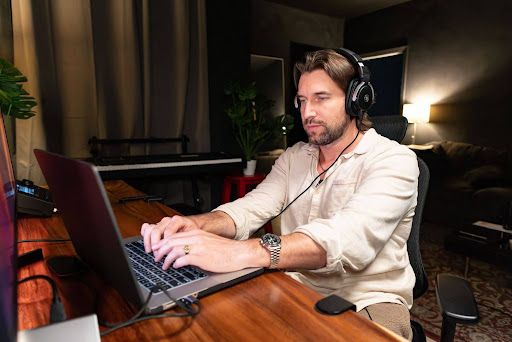
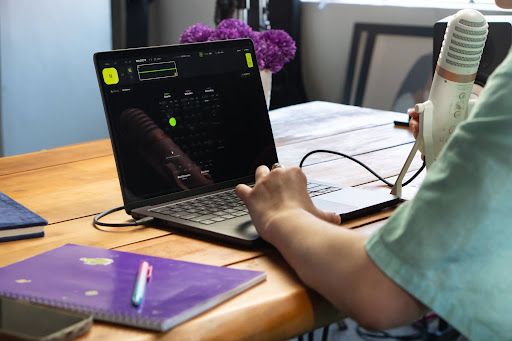
Songwriters can start producing music with a computer, a digital audio workstation (DAW), an audio interface, headphones or monitors, a microphone or instrument, and software instruments or samples as needed. The exact setup depends on what you plan to record and produce.
Choosing a DAW
Choose a DAW that fits the way you write and produce. A DAW is the software where you record, edit, arrange, and mix music, so it is worth checking a few features before you commit.
When choosing a DAW, consider:
- Audio and MIDI recording capabilities
- Arrangement and editing tools
- Automation features
- Compatibility with plugins
- Workflow and interface
- Computer requirements
The best DAW for a songwriter is one that fits your own writing and production habits. Learning one DAW thoroughly is generally more useful than constantly switching between different platforms.
Essential Equipment and Tools
Beyond a computer and a DAW, a few tools come up often in songwriters' setups:
- Headphones or studio monitors that let you hear your mix clearly
- An audio interface, which isn't mandatory (a built-in or USB microphone can work) but can improve sound quality, reduce latency, and make monitoring easier
- A microphone for recording vocals and acoustic instruments, especially instruments that do not have a built-in pickup
- A MIDI keyboard or controller for playing virtual instruments, which many people find more natural than clicking in notes with a mouse
Not every songwriter needs all of these immediately. For example, a songwriter working primarily with MIDI instruments may prioritize a MIDI keyboard, while a vocalist or guitarist may need an audio interface and microphone.
Audio, MIDI, Samples, and Virtual Instruments
Audio is recorded sound, such as a vocal or guitar performance, captured as digital data. MIDI records performance information, such as notes, timing, velocity, and controller data, rather than the sound itself.
Virtual instruments are software instruments that produce sound inside your DAW and are usually played or programmed with MIDI. Samples are prerecorded audio, such as drum hits, loops, or textures, that you can drop into a project or load into a sampler.
For songwriters, the practical difference is flexibility. A MIDI part can be switched to a different instrument, transposed, or edited note by note after it's recorded, while an audio recording captures a fixed performance with its own tone and feel, which is often exactly what a lead vocal needs.
How to Turn a Song Idea Into a Production
To turn a song idea into a production, start with the core demo, establish the musical foundation, develop the arrangement, add supporting sounds, and create contrast between sections.
Start With Your Song Idea or Demo
A production may start with a simple demo such as a voice memo, a piano-and-vocal sketch, or a guitar recording on your phone. Before building anything, identify what makes the song work, whether that's the melody, a lyric, the chord progression, or a particular groove.
Next, set up a DAW project with a tempo and key that suit the song. It often helps to record a quick guide vocal or guide instrument to the click, so you have a reference to build around. This guide track usually gets replaced later, so it doesn't need to be perfect.
Build the Musical Foundation
The foundation is the set of parts that holds the song together, usually chords, rhythm, and bass. Many producers start with drums or a chord part, but you can also start from a bassline or a melody if that's what drives the song.
Keep the foundation simple at first and let it support the song rather than compete with it. A basic drum pattern, a clear chord part, and a bassline that follows the progression are often enough to hear whether the production is heading in the right direction.
Develop the Arrangement
Arrangement is how your song is organized over time: which sections appear, how long they run, and which parts play in each one. If your song already has a verse, chorus, and bridge, the arrangement decides how each of those sections sounds and how the song builds from start to finish.
Some common structures include:
- Intro → Verse → Chorus → Verse → Chorus → Bridge → Final Chorus → Outro
- Intro → Verse → Pre-Chorus → Chorus → Verse → Pre-Chorus → Chorus → Bridge → Chorus → Outro
The structure does not need to follow a specific pattern. When developing it, decide:
- Which instruments appear in each section
- When new elements enter
- Where instruments drop out
- How the song builds toward important sections
- Where instrumental or vocal moments need space
Our guide on How to Arrange Music: A Step-by-Step Guide for Beginners walks through this stage in more depth.
Add Instruments, Textures, and Effects
Once the arrangement works, add sounds that support the song's musical direction. Each layer should have a clear job, and the lead vocal needs room, since in most songs it carries the lyric and melody listeners follow.
- Instruments add new musical parts, such as guitars, keys, synths, strings, extra percussion, or background vocals. Choose them for the role they play, like filling out the harmony or adding a countermelody.
- Textures add atmosphere rather than a distinct musical part, such as pads, ambient recordings, or subtle sample layers. They're often kept low in the mix, where they're felt more than heard.
- Effects such as reverb, delay, and saturation shape both recorded audio and virtual instrument tracks, adding space, depth, or grit. A light touch usually works best at this stage, since detailed effect choices are refined during mixing.
Create Contrast Between Sections
Contrast helps a song feel like it's going somewhere. A verse might use fewer instruments and a lighter rhythm, while the chorus brings in fuller drums, wider harmonies, and more energy.
You can create contrast by adding or removing parts, changing the rhythm, moving a part to a higher or lower register, or pulling everything back for a moment of space. Even small changes, like dropping the drums for the first bar of a chorus, can make a section land with more impact.
How to Produce and Shape Your Song
Once the arrangement feels solid, production shifts toward capturing strong performances and shaping the sound. A typical sequence looks like this, though stages often overlap and you may move back and forth between them:
- Set up the project with the right tempo, key, and track layout.
- Record, program, or import parts, replacing guide tracks with final performances.
- Refine the arrangement now that final parts are in place, adjusting where parts enter, drop out, and build.
- Edit timing, takes, and transitions so each part feels tight and intentional.
- Mix the tracks, using effects to balance and shape them.
- Master the finished mix, which means preparing it for release with final polish and consistent loudness.
- Export the final files in the formats you need.
Avoid trying to perfect every track immediately. Work from the larger musical picture toward smaller production details.
How Can Songwriters Improve Their Production Skills?
Songwriters can improve production skills through critical listening, studying professional productions, recreating selected parts, and consistently producing their own songs.
Develop Critical Listening Skills
Critical listening means hearing a track in terms of its parts, not just as a whole. Try focusing on one element at a time, like the drums, the bass, or the vocal, and notice how loud it sits, where it's placed, and how it changes between sections.
Listening on different systems, such as headphones, a car stereo, or a phone speaker, also trains you to hear how production choices translate outside your studio.
Study Productions You Admire
Pick songs you love that are similar in style to your own and study how they're built. Notice how the intro sets the mood, which instruments enter in each section, and how the chorus feels bigger than the verse.
Writing a simple map of a song's sections and what plays in each one can reveal patterns you can apply to your own productions.
Recreate Parts of Existing Songs
Trying to recreate a drum groove, a synth sound, or a short section of a favorite song is a practical way to learn production techniques. The goal is to understand how a sound or part was built, not to release a copy.
Keep these recreations as private practice, since releasing someone else's song or recording involves rights and licensing considerations.
Practice by Producing Your Own Songs
The most direct way to improve is to complete productions regularly. Each finished track creates an opportunity to evaluate what worked and what needs improvement.
Instead of waiting until you know every production technique, use each song to practice a specific skill, such as vocal editing, drum programming, arrangement, mixing, or automation.
Should You Produce Your Own Music or Work With a Producer?
Produce your own music when you want full creative control and have time to learn, and work with a producer when you need skills, a sound, or a deadline you can’t meet on your own. Many songwriters combine both, producing the demo and early arrangement themselves before bringing in a producer to finish the track.
Producing it yourself may suit you if:
- You want to control every arrangement, sound, and revision decision.
- You enjoy experimenting with production while you write.
- Your budget is limited, and you have time to build your skills.
A producer may help if:
- You’re aiming for a sound you can’t yet achieve.
- You’re stuck on a song and want an outside perspective.
- You’re working to a release deadline.
If you work with a producer, agree on credits and splits in writing before you start. A producer who contributes melody, lyrics, or an original instrumental may qualify for a songwriting share, while a fee or master royalties cover their work on the recording. Record the agreed songwriting shares on a split sheet.
How to Finish Your Song Production
Finishing is often the hardest part of production. These final steps help you move from a track that's almost there to one that's ready to share.
Refine the Arrangement and Mix
Start by listening to the whole song from beginning to end and asking whether every part still serves it. Remove parts that clutter the arrangement, and check that each section has enough contrast from the one before it.
Then refine the mix so every element is clear and balanced. Mixing involves adjusting levels, EQ, compression, and effects so the song sounds cohesive, with the vocal sitting clearly on top. If you are wondering how to make a song sound professional, a clear arrangement and a balanced mix can be a good place to start.
How to Make a Song Sound Professional
A professional-sounding song usually comes from clean levels, a clear lead vocal, and a mix that holds up next to released tracks. Focus on these checks:
- Use reference tracks: Import one or two released songs in a similar style and compare them with your mix at matched volume, so loudness doesn’t skew your judgment.
- Gain stage as you go: Keep recordings and track levels well below clipping, and leave headroom on the master bus for mastering.
- Set the vocal first: Balance the lead vocal so every word is clear, then fit the other parts around it.
- Treat loudness as a mastering step: Streaming services adjust playback volume. Spotify normalizes tracks to -14 LUFS by default, so a heavily limited master won’t necessarily play louder.
Get Feedback and Make Final Changes
After working on a song for a while, it's easy to lose perspective. Taking a break of a day or two before listening again can help you hear it more like a first-time listener.
Sharing the track with a few trusted listeners, such as fellow musicians or people who know the genre, can highlight issues you've stopped noticing.
Know When Your Track Is Finished
A track is finished when additional changes are no longer solving meaningful problems or improving the song. Save a final version, compare it with your reference tracks, and listen again after taking a break. Fresh ears can make it easier to identify any remaining issues.
The goal is not to add production indefinitely. The goal is to create a finished recording that communicates the songwriting clearly.
Turn Your Song Ideas Into Finished Songs with Yamaha Creator Pass
Ready to turn your songwriting ideas into finished productions? Subscribe to Yamaha Creator Growth Pass or Pro Pass and get access to Cubase 15 AI, Output Arcade with 80,000+ samples, and LANDR’s 3 million+ loop and one-shot library, AI mastering, and distribution with a paid subscription.
Start with a 7-day free trial and explore the tools you need to write, produce, master, and prepare your music for release.
Frequently Asked Questions
Do songwriters need to know music production?
No, songwriters do not need to know music production as these are two distinct roles. Many successful songwriters focus on writing and collaborate with producers. Knowing the basics of production can still help you make better demos, communicate ideas more clearly to collaborators, and hear how production choices affect the way a song lands.
What is the difference between songwriting and music production?
Songwriting creates a song's core elements: melody, lyrics, chords, and structure. Music production turns that song into a finished recording through instrumentation, arrangement, performance, recording, and mixing. The two often overlap, especially when one person both writes and produces.
What equipment does a songwriter need for music production?
Most songwriters can start with a computer, a DAW, and headphones or studio monitors. If you record vocals or acoustic instruments, a microphone is also useful, and an audio interface and a MIDI keyboard are common additions, depending on what you record and how you like to work.
Should songwriters produce their own music?
It depends on your goals. Producing your own music offers creative control and flexibility, while working with a producer adds outside perspective and experience. Many songwriters do both, producing their own demos and collaborating with a producer on songs they plan to release.
When should a songwriter work with a music producer?
Hire a producer once the song itself is finished or close to it, so their time goes into production rather than rewriting. Bring a demo, reference tracks, and a clear budget to the first conversation, and agree on scope, fees, and credits before work starts.